
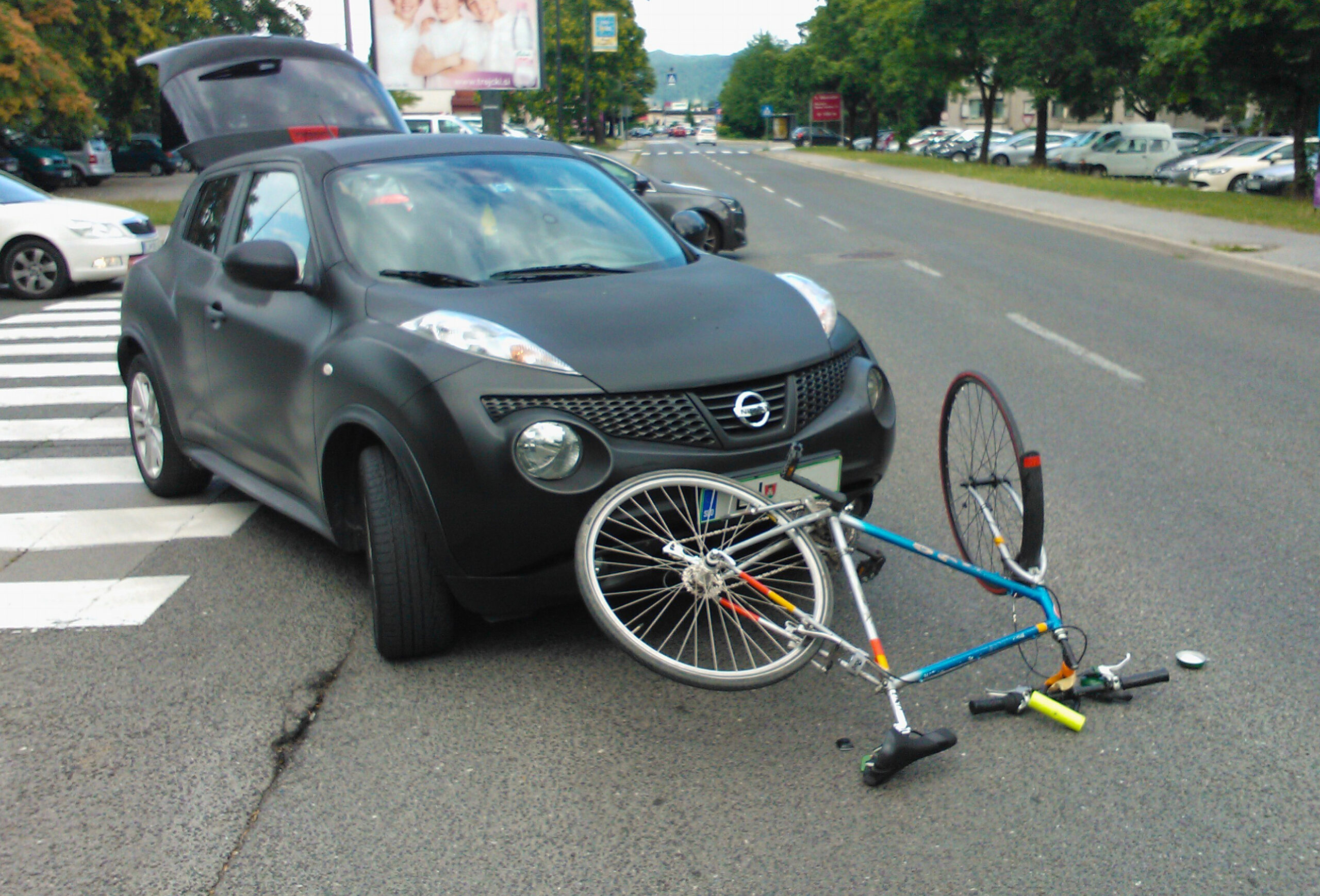
In 2024, 1,103 people were killed riding bicycles on American roads, according to the National Highway Traffic Safety Administration, and an estimated 52,887 more were injured. The death toll fell 6 percent from 2023, but it remains far above where it stood a decade ago, and cyclists still account for nearly 3 percent of all traffic deaths while making a far smaller share of trips.
Those numbers describe a physical mismatch. A two-ton vehicle and a 20-pound bicycle do not share the consequences of a collision. What the numbers do not capture is a second mismatch that begins the moment the crash ends: the driver is usually uninjured, insured, and able to tell a story to the responding officer, while the cyclist is often on the ground, concussed, and the last person anyone asks.
This guide is written for the rider trying to understand what happens next. It covers what to do immediately after a crash, how fault is decided under the different rules that govern each state, the digital evidence that now settles disputes, how e-bikes are changing the picture, and what to expect from the claims process.
Key Takeaways
- NHTSA reports 1,103 cyclist deaths and an estimated 52,887 injuries in U.S. traffic crashes in 2024. About 81% of deaths occurred in urban areas, and 60% happened away from intersections.
- The first hour matters most: get medical care, make sure your account reaches the police report, photograph everything, and preserve the bike, helmet, and any ride data before they are repaired, discarded, or overwritten.
- Fault rules vary sharply. Most states use comparative negligence, but Alabama, Maryland, North Carolina, and Virginia still bar recovery if the injured person is even slightly at fault. Washington, D.C. has carved out protections for cyclists.
- All 50 states have some form of safe passing law, and 38 states plus D.C. set a minimum distance, typically three feet.
- E-bikes are a growing share of serious crashes. The Consumer Product Safety Commission estimates 155,200 emergency department visits involving e-bikes from 2017 through 2024, and motor vehicle collisions are a leading hazard in e-bike deaths.
Who Gets Hurt, Where, and When
The federal data paints a consistent picture. According to NHTSA’s 2024 Traffic Safety Facts on bicyclists:
- Most fatal crashes are urban. About 81% of cyclist deaths occurred in urban areas.
- Most happen between intersections, not at them. 60% of deaths occurred at non-intersection locations and 30% at intersections. That pattern points to overtaking and sideswipe crashes on open road, not only turning conflicts.
- The typical victim is not a teenager. The average age of cyclists killed in 2024 was 48, and the largest numbers of deaths were in the 55 to 64 age range. Men accounted for 87% of cyclists killed.
- Three states account for a large share. Florida (208), California (163), and Texas (79) recorded the most cyclist deaths.
- Larger vehicles dominate the fatal crashes. Light trucks, a category that includes pickups and SUVs, were the most frequently involved vehicle type in single-vehicle crashes that killed a cyclist.
- Season matters. NHTSA notes that cyclist deaths are highest from July through October.
Measure (2024, U.S.) | Figure |
|---|---|
Cyclists killed in traffic crashes | 1,103 (down 6% from 1,173 in 2023) |
Cyclists injured (estimate) | 52,887 |
Share of all traffic deaths | 2.8% |
Deaths in urban areas | 81% |
Deaths away from intersections | 60% |
Average age of cyclists killed | 48 |
States with the most deaths | Florida (208), California (163), Texas (79) |
Source: NHTSA, Bicyclists and Other Cyclists: 2024 Data (DOT HS 813 822).
For anyone evaluating a crash, those facts carry a practical lesson. The stereotype of the reckless young rider darting into traffic does not match the data. The more common fatal scenario is a middle-aged adult on an urban road, struck by a larger vehicle that was overtaking or turning.
What to Do in the First Hour After a Bicycle Accident
Every step below serves one of two purposes: protecting your health, or protecting the record of what happened. In a bike crash, both are fragile.
- Get out of further danger and call 911. Move yourself and the bike out of traffic only if you can do so safely. Ask for police and, if you are hurt at all, for medical help. A police report is the first document every insurer will read.
- Make sure your account reaches the report. Drivers are usually uninjured and talk first. If you are able, tell the officer what happened in plain, factual terms. If you were taken away by ambulance before giving a statement, call the police department later to add your account or request a supplement.
- Do not apologize or guess. Shock makes people say "I didn’t see them" or "I’m fine." Either can be quoted back later. Describe what you know, and say you are not sure about what you do not know.
- Get the driver’s information. Name, phone number, license plate, insurance company, and policy number. Photograph the insurance card and license plate rather than writing them down.
- Photograph the scene before it changes. Capture the vehicle and its damage, the bike and where it came to rest, the lane position, bike lane markings or sharrows, traffic signals and signs, skid marks, debris, road defects, lighting, and your injuries. If you can, take a short video panning the whole scene.
- Find witnesses. Other cyclists, pedestrians, and nearby drivers often leave before police arrive. A name and phone number is enough. Independent witnesses are especially valuable in bike crashes because the dispute often comes down to lane position or who moved first.
- Look for cameras. Note businesses, homes with doorbell cameras, traffic cameras, transit buses, and rideshare vehicles nearby. Much of this footage is overwritten automatically, sometimes within days, so the request to preserve it should go out quickly.
- Get a medical evaluation the same day, even if you feel fine. Adrenaline masks injuries, and head injuries in particular can appear hours or days later. Gaps between the crash and the first treatment are one of the most common grounds insurers use to dispute injury claims.
- Preserve the bike, helmet, and gear. Do not repair the bike, throw out the helmet, or wash the clothing. Damage patterns help reconstruct the crash and show the force of impact. Store everything as it is.
- Save your ride data. Bike computers, GPS watches, and fitness apps record speed, location, and time to the second. Export or back up the ride file before the device syncs, deletes, or overwrites it.
- Notify your own insurer and stay off social media. Report the crash to your auto insurer even though you were not driving, because your policy may provide coverage (see below). Avoid posting about the crash or your recovery; insurers do look.
The Evidence That Decides Bike Crash Claims Has Gone Digital
Twenty years ago, a bike crash often came down to two conflicting stories and a police officer who arrived after the fact. Today, the evidence that settles those disputes is more likely to be digital, and it is more perishable than physical evidence.
- Ride files. A cyclist’s GPS computer or watch typically logs speed and position every second. That data can show the rider was traveling at a steady pace in the lane, not swerving, and can pin down the exact time of impact.
- Rear radar and camera lights. A growing number of riders use rear-facing radar units and lights with built-in cameras. Footage from behind the rider can show exactly how close a vehicle passed and whether it ever moved over.
- Vehicle event data recorders. Most modern passenger vehicles record speed, braking, and throttle data in the seconds around a crash. That information can confirm or contradict a driver’s account of slowing down or never seeing the rider.
- Phone records. Distracted driving is a recurring factor in crashes with cyclists. Records showing phone activity at the moment of impact can be obtained through proper legal channels.
- Third-party video. Doorbell cameras, dashcams, business security systems, and transit vehicles capture far more of the street than they did a decade ago, but most systems overwrite footage on a rolling basis.
The common thread is speed. Physical evidence like a damaged frame can sit in a garage for a year. Digital evidence often has a lifespan measured in days. A preservation letter sent the first week can be worth more than any argument made a year later.
Who Is at Fault? The Most Common Bike Crash Patterns
Every crash turns on its own facts, but most collisions between cars and bicycles follow a handful of recognizable patterns. Each one carries a typical fault picture.
The overtaking or sideswipe crash
A driver passes a cyclist too closely or clips the rider while moving back into the lane. This is the pattern most directly addressed by safe passing laws. According to the League of American Bicyclists, all 50 states have some form of safe passing law, and 38 states plus the District of Columbia set a specific minimum distance, typically three feet. A driver who could not pass safely was required to wait.
The right hook
A driver passes a cyclist and then turns right across the rider’s path, often into a driveway or side street. Because the driver was overtaking and then turned across a lane of travel, fault usually falls heavily on the driver.
The left cross
An oncoming driver turns left across the cyclist’s path at an intersection, often because the driver was watching for cars and did not register the bicycle. Drivers turning left generally must yield to oncoming traffic, and bicycles are traffic.
Dooring
A parked driver or passenger opens a door into the path of an approaching cyclist. Many states have laws prohibiting opening a vehicle door unless it is reasonably safe to do so, and the person who opened the door is usually responsible. These claims sometimes involve rideshare passengers, which can add another layer of insurance.
Driveway and parking lot exits
A driver pulls out of a driveway, parking lot, or alley without seeing a cyclist approaching on the road or bike lane. Drivers entering a roadway generally must yield to traffic already on it.
Rear-end crashes
A driver strikes a cyclist from behind. These are among the deadliest crashes because of the speed difference, and they often involve distraction, impairment, or poor visibility at night.
In every pattern, the defense will look for something the cyclist did: riding against traffic, running a signal, riding at night without lights, or riding outside a bike lane. That is why the details of lane position, lighting, and signals matter so much, and why the fault rule in the state where the crash happened can decide the outcome.
How Fault Rules Change the Outcome State by State
Once fault is shared, the rule your state follows determines whether you recover anything. There are three basic approaches.
- Pure comparative negligence. You can recover damages even if you were mostly at fault, reduced by your share. A cyclist found 30% at fault recovers 70% of the damages.
- Modified comparative negligence. Most states follow a version of this rule. You recover a reduced amount as long as your share of fault stays below a threshold, usually 50% or 51%. Cross it, and you recover nothing.
- Contributory negligence. In four states, Alabama, Maryland, North Carolina, and Virginia, any negligence by the injured person, even 1%, can bar recovery entirely, subject to narrow exceptions such as the "last clear chance" doctrine.
Washington, D.C. shows how this can change. The District once followed contributory negligence, but laws passed in 2016 and later expanded now protect vulnerable road users. Under D.C. Code § 50-2204.52, a cyclist’s negligence bars recovery only when it was a proximate cause of the injury and greater than the combined negligence of the defendants. The expanded law extends that protection to riders of e-bikes, scooters, and similar devices.
Maryland, by contrast, still applies contributory negligence to cyclists. Its Vulnerable Road User Protection Act added penalties for drivers who seriously injure cyclists and pedestrians, but it left the fault rule in place, and a 2026 bill to change it for cyclists and pedestrians did not pass. The same crash can produce opposite results a few miles apart.
Whose Insurance Pays After a Cyclist Is Hit by a Car?
Riders are often surprised by how many policies can be involved. Depending on the state and the policies in place, coverage may come from:
- The driver’s liability insurance, which is the primary source when the driver was at fault.
- Your own auto policy, even though you were on a bicycle. Uninsured and underinsured motorist coverage often follows you as a cyclist, which matters when the driver has minimal coverage or flees the scene. In no-fault states, personal injury protection on your own policy may pay medical bills first.
- Your health insurance, which typically pays treatment costs and may later seek reimbursement from any settlement.
- Other policies, such as a rideshare company’s coverage when a driver or passenger was working on a trip, or an employer’s policy when the driver was on the job.
Hit-and-run crashes are a particular risk for cyclists, because a driver who strikes a bicycle can usually drive away in an undamaged or barely damaged vehicle. In those cases, uninsured motorist coverage under the rider’s own auto policy is often the most important source of recovery. Review that coverage before you need it.
E-Bikes Are Changing the Picture
Electric bicycles have added speed and riders to the same roads. The Consumer Product Safety Commission’s April 2026 micromobility report estimates 155,200 emergency department visits involving e-bikes from 2017 through 2024 and identifies motor vehicle collisions and control issues as the top hazards in e-bike deaths. Across all micromobility products, the agency is aware of deaths rising from 5 in 2017 to 135 in 2024.
E-bike crashes raise questions that conventional bike crashes do not:
- Classification. Many states sort e-bikes into classes by top assisted speed and whether they have a throttle. The class can affect where the bike may legally be ridden, which in turn affects fault arguments.
- Speed perception. Drivers often misjudge how fast an e-bike is approaching, especially when turning left across its path.
- Product liability. When a crash involves a battery failure, brake defect, or sudden acceleration, the manufacturer, importer, or seller may share responsibility alongside any driver.
- Insurance gaps. Some auto and homeowners policies treat e-bikes differently from conventional bicycles. Coverage terms should be checked carefully.
Common Bicycle Accident Injuries
Because cyclists have no protective shell, injuries tend to be serious and often involve multiple body regions. The most common include:
- Head and brain injuries, including concussions and traumatic brain injury, sometimes even when a helmet was worn. Memory gaps around the crash are a warning sign worth reporting to a doctor.
- Fractures of the collarbone, wrist, arm, hip, and ribs, often from the rider bracing for impact or striking the ground.
- Shoulder and spinal injuries, including rotator cuff tears, herniated discs, and in severe cases spinal cord damage.
- Road rash and soft tissue injuries, which can lead to infection, scarring, and skin grafts.
- Facial and dental injuries, common in over-the-handlebar falls.
Helmet use is a frequent point of dispute. No state requires all adult cyclists to wear a helmet, though many require helmets for children. Whether a defendant can argue that a missing helmet should reduce damages varies by state, and in many places that evidence is limited or excluded. A worn helmet should be preserved, because its damage can help show where and how hard the head was struck.
What a Bicycle Accident Claim Can Recover
A cyclist injured by a negligent driver can generally seek compensation for:
- Medical expenses, past and future, including surgery, therapy, and rehabilitation.
- Lost income and, for serious injuries, reduced future earning capacity.
- Pain, suffering, and loss of enjoyment of life, which for many cyclists includes the loss of riding itself.
- Property damage, including the bicycle, helmet, clothing, and electronics, valued at replacement cost.
- In fatal crashes, wrongful death damages for the surviving family.
Every claim is different, and no article can predict what a specific claim is worth. What can be said generally is that documented, consistent medical treatment and strong liability evidence are the two factors that most often separate a fair resolution from a low offer.
Deadlines You Cannot Miss
Every state sets a statute of limitations for injury claims, commonly two or three years from the date of the crash, though some deadlines are as short as one year. Claims against a city, county, or state agency, for example over a dangerous road design or a defect in a bike lane, often require a formal written notice within a much shorter period, sometimes only a few months. Missing either deadline can end a claim regardless of its merit, so the deadline should be confirmed with a licensed attorney in the state where the crash occurred.
Questions to Ask Before Hiring a Bicycle Accident Lawyer
Bike crash claims reward lawyers who understand how cyclists ride and how juries view them. Before signing with a firm, consider asking:
- How many bicycle crash claims have you handled, and how many went to trial?
- How quickly will you send preservation requests for video, vehicle data, and phone records?
- How does our state’s fault rule apply to my facts?
- Which insurance policies, including my own, might cover this crash?
- How are fees and case costs calculated, and when are they paid?
A lawyer who can answer those questions specifically, and who is willing to try a case if an insurer will not pay fair value, is a lawyer an insurer will take seriously.
Get Help From a Local Injury Attorney
If you were hurt in a bike crash, you do not have to sort out the police report, the insurance companies, and the deadlines on your own. A local personal injury attorney can review what happened at no cost and tell you where you stand. Start a free case review with Injury Recovery Hub, and we can help connect you with an attorney who handles bicycle crashes in your area.
Frequently Asked Questions
What should I do immediately after a bicycle accident?
Call 911, get to safety, and make sure your account of the crash reaches the police report. Photograph the scene, the vehicle, your bike, and your injuries; get the driver’s insurance and witness contact information; and see a doctor the same day even if you feel fine. Preserve the bike, helmet, and any ride data from your GPS device or app.
Who is at fault when a car hits a cyclist?
Fault depends on the facts. Drivers are commonly responsible in overtaking, right-hook, left-cross, dooring, and driveway-exit crashes, because they must pass safely, yield, and check before opening doors or entering the road. A cyclist’s own conduct, such as riding against traffic or without lights at night, can reduce or bar recovery depending on the state’s fault rule.
Can I recover damages if I was partly at fault for a bike accident?
In most states, yes, but your recovery is reduced by your share of fault, and in modified comparative negligence states you recover nothing if your share reaches a threshold, usually 50% or 51%. In Alabama, Maryland, North Carolina, and Virginia, contributory negligence can bar recovery for even slight fault. Washington, D.C. has special protections for cyclists.
Does my car insurance cover me if I am hit while riding a bike?
Often it does. Uninsured and underinsured motorist coverage on your own auto policy commonly applies when you are hit as a cyclist, and in no-fault states your personal injury protection may pay medical bills first. Coverage depends on your state and policy terms, so review the policy and report the crash to your insurer.
How long do I have to file a bicycle accident claim?
Statutes of limitations for injury claims are commonly two or three years but can be as short as one year, and claims against government entities often require written notice within a few months. Confirm the deadline with a licensed attorney in the state where the crash happened.
About the Author
Fadi Agour, J.D., is a licensed attorney and the founder and CEO of FadiLaw Marketing LLC, the Houston-based parent company of Best Case Leads, Real Performance Marketing, Masstortsco, and Redostar. For more than seven years he has built performance-marketing companies that connect injured consumers with the plaintiff law firms equipped to represent them. His companies have earned a place on the Inc. 5000 list of America's fastest-growing private companies seven consecutive times (7x Badge). He writes about mass tort litigation, product liability, and the business of plaintiff law.
Sources and Further Reading
- National Highway Traffic Safety Administration, "Bicyclists and Other Cyclists: 2024 Data," Traffic Safety Facts (DOT HS 813 822): https://crashstats.nhtsa.dot.gov/Api/Public/ViewPublication/813822
- National Highway Traffic Safety Administration, "Bicycle Safety": https://www.nhtsa.gov/road-safety/bicycle-safety
- League of American Bicyclists, "Bike Law University" (safe passing laws by state): https://bikeleague.org/bike-laws/bike-law-university/
- U.S. Consumer Product Safety Commission, "Micromobility Products-Related Deaths, Injuries, and Hazard Patterns: 2017-2024" (April 2026): https://www.cpsc.gov/s3fs-public/Micromobility_Products-Related_Deaths_Injuries_and_Hazard_Patterns_2017-2024.pdf
- National Safety Council, Injury Facts, "Bicycle Deaths": https://injuryfacts.nsc.org/home-and-community/safety-topics/bicycle-deaths/
- Stein Sperling, "Maryland’s Contributory Negligence Rule" (contributory negligence jurisdictions): https://steinsperling.com/marylands-contributory-negligence-rule/
- Maryland Motorcycle Accident Lawyer Blog, "How Maryland’s Vulnerable Road User Protection Act Helps Injured Cyclists" (Sept. 2026; D.C. Code § 50-2204.52): https://www.marylandmotorcycleaccidentlawyerblog.com/how-marylands-vulnerable-road-user-protection-act-helps-injured-cyclists/
- Northern Virginia Legal Examiner, "D.C. Contributory Negligence Rule Changed to Protect Scooter, E-Bike Riders": https://northernvirginia.legalexaminer.com/rakin-hamad/transportation/d-c-contributory-negligence-rule-changed-to-protect-scooter-e-bike-riders/
- Greater Greater Washington, "A DC law that was terribly unfair to cyclists and pedestrians will soon be a thing of the past" (Motor Vehicle Collision Recovery Act): https://ggwash.org/view/42918/a-dc-law-that-was-terribly-unfair-to-cyclists-and-pedestrians-will-soon-be-a-thing-of-the-past-lets-thank-the-dc-council
This article is provided for general informational purposes only. It is not legal advice and does not create an attorney-client relationship. Injury Recovery Hub is not a law firm. Laws, deadlines, and insurance rules vary by state and change over time; consult a licensed attorney in your state about your specific situation.